GeoBallistics
- 3.5
- Rating
- 100.00K
- Installs
- Free
- Price

 Analysis by App-foxy
When I first opened GeoBallistics, I understood its appeal quickly: it brings a ballistics calculator and a GPS rangefinder into the same sports app instead of making me switch between separate tools. That combination is the whole point, but it is more useful than the short description suggests. The practical benefit is keeping distance information and trajectory calculations in one workflow while I am preparing a shot or checking a range.
This is a free app from Sheltered Wings, Inc., aimed at everyone rather than a narrowly defined age group. It belongs to the sports category, although its audience is more specific than that label sounds. I see it as a tool for people who already care about shooting data and want a mobile reference beside them, not as a casual sports companion. The app has been available since April 25, 2016, and version 7.4.0 is the current release.
Why combining the calculator and rangefinder matters
The most important capability here is the connection between two jobs that are normally separated. A ballistic calculator is only as useful as the distance and conditions entered into it, while a rangefinder is most useful when its reading immediately informs a decision. By placing both functions together, GeoBallistics reduces the small but annoying gap between measuring a target and working out what that measurement means.
You May Also Like

 Blood Strike: 2.5 Anniversary
Blood Strike’s Loadouts Turn Every Drop Into a Tactical Gamble
A close look at Blood Strike’s custom loadouts: how fast access to signature weapons reshapes its battle royale rhythm, rewards preparation, and narrows the gap between fights.

 Pandora - Music & Podcasts
Pandora’s Music Is Easy to Start, but Harder to Recover
Pandora’s strength is its low-effort path from a seed to a station. Its weak spot is how much confidence it asks you to place in connection, setup, and quiet recovery.

 8 Ball Pool
 Is Built on Rivalries, Rematches, and Routine
A close look at the rivalries, rematches, shared routines, and unanswered safety questions that turn a quick pool match into a persistent mobile community.

 Samsung Music
’s Quiet Strength Is Playing What You Already Own
Its reach comes less from spectacle than from dependable access to a personal library. That simplicity is both the app’s strongest retention engine and its ceiling.

 AccuWeather: Weather Radar
AccuWeather Review: A Quick, Clear Forecast for Everyday Decisions
For everyday plans, the best forecast is the one you can understand quickly. AccuWeather makes rain timing, radar, and local conditions easy to act on, with a few trade-offs.

 Hill Climb Racing
Why Hill Climb Racing Still Turns Crashes Into One More Run
A tiny car, a bumpy hill and one more upgrade: Hill Climb Racing keeps resurfacing because its simple chaos makes every near-miss feel personal.
More From Our News Desk
View All News


In my experience, that makes the app less about browsing screens and more about building a repeatable process. I can begin with the distance, review the calculated result, and then decide whether the setup makes sense before taking action. The value is not that a phone suddenly replaces careful shooting practice. The value is that the app keeps the information organized at the moment it is needed.
That distinction is important. Someone looking only for a basic GPS utility may find the ballistic side unnecessary. Likewise, a user who wants a simple calculator with no setup may consider the rangefinder element more equipment than they need. GeoBallistics makes the most sense when both parts belong in the same outing.
What the rangefinder adds to the calculation
Distance is often treated as a simple number, but it is the bridge between a real target and a calculated result. A guessed distance can make an otherwise careful calculation less useful. The GPS rangefinder gives the app a practical way to establish that starting point, so the calculation is connected to a location-based measurement rather than a casual estimate.
I would not treat that as permission to ignore the environment. A GPS-based reading still depends on how accurately the relevant locations are represented and on the conditions around the user. It is best viewed as an aid for establishing distance, not as an infallible replacement for checking the range yourself. That is one of the app's less obvious lessons: combining tools does not remove the need for judgment.
The workflow also helps prevent a common mistake: collecting a distance in one app, remembering it incorrectly, and then entering a rounded number somewhere else. Keeping the process together can make preparation more consistent. For users who repeat similar sessions, that consistency may matter more than having a long list of extra visual features.
How I would use it before heading out
I would start by opening the app before arriving at the range and making sure the phone is ready for the task. A small screen is not the ideal place to discover that a setting needs attention, so preparing in advance is sensible. I would then use the GPS rangefinder to establish the distance relevant to the planned shot and move directly into the ballistic calculation.
The key is to treat the result as a planning reference. I would compare it with the conditions I can actually observe, rather than blindly following a number. This approach makes the app useful without pretending that a calculation can account for every variable in a real outdoor setting. It also gives me a clear reason to review the input before trusting the output.
For a new user, the first session may feel more technical than a normal sports app. That is not necessarily a defect, but it does mean patience helps. The app rewards people who understand why a distance matters and who are willing to check their entries. If you want a one-tap answer with no learning curve, this probably will not feel effortless.
A realistic range-day scenario
Imagine I am at an outdoor range with several target positions and I want a consistent way to prepare for each one. Instead of estimating the distance from memory, I can use the app's GPS rangefinder as the first step. I then move to the ballistic calculator and use that information as part of the setup. The advantage is not dramatic automation; it is a cleaner sequence with fewer opportunities to lose track of what the distance referred to.
That becomes especially helpful when I pause between attempts. If I am interrupted, change position, or return to a previous target, having the measurement and calculation in one place gives me a better chance of resuming the process accurately. I still need to confirm that the selected target and current conditions match what I entered, but the app provides a central reference instead of forcing me to reconstruct the process.
Another useful situation is comparing two distances during the same practice session. The app can serve as a common workspace for those checks, which is more practical than switching between a dedicated rangefinder tool and a separate calculator. The real gain is mental: I spend less time remembering which value came from which screen and more time evaluating whether the result is sensible.
I would also use it during preparation at home, especially if I already know the locations I want to examine. That lets me become familiar with the workflow before relying on it outdoors. A phone interface that seems obvious in a quiet room can feel less convenient in bright light, with gloves, or while attention is divided. Practicing the sequence first is a simple way to reduce friction later.
Where the app is strongest
GeoBallistics is strongest when the user wants a compact digital companion rather than a collection of unrelated shooting utilities. The combined design gives the app a clear purpose. It is not merely a calculator with a sports label and it is not merely a map tool; its appeal comes from the handoff between distance finding and ballistic planning.
I also appreciate that this approach encourages a more disciplined habit. Rather than entering whatever distance seems familiar, I am prompted to connect the calculation to the place and target in front of me. That does not guarantee a perfect result, but it can improve the quality of the preparation routine. For experienced users, that may be enough to justify keeping the app installed.
The app's age is another practical consideration. It has been around for several years, so it is not a brand-new experiment, and the current version is 7.4.0. I would still judge it by how comfortably it works on my particular phone, because an established app can feel different across devices and operating-system versions. It supports Android 7.0 and later, which keeps it accessible to many older Android phones.
Trade-offs I noticed
The biggest trade-off is simplicity versus control. Bringing the calculator and GPS rangefinder together makes the app more capable than a basic distance tool, but it also gives the user more to understand. If I only need a quick distance estimate, the extra ballistic context may slow me down. If I want a highly specialized professional system, a dedicated device or more advanced platform may offer a better fit.
There is also a trust issue that applies to any calculation app. A neat result on a screen can look more authoritative than it really is. I would not use GeoBallistics as a substitute for confirming inputs, understanding the equipment involved, or following safe range procedures. The app can support preparation, but it cannot inspect every physical condition that influences a real-world outcome.
The phone itself creates another limitation. GPS performance, screen visibility, battery condition, and the general inconvenience of handling a handset outdoors all affect the experience. A purpose-built rangefinder may be faster in a situation where the priority is immediate distance measurement. GeoBallistics is more attractive when convenience comes from carrying one familiar device, not when the user demands the fastest dedicated hardware.
Cost is friendly at the starting point because the app is free, but in-app purchases are listed at $14.99 per item. That means I would install it without an upfront commitment, then pay attention to what I actually need before buying anything. For a casual user, the free entry may be sufficient to explore the workflow. For someone who depends on advanced use, the possible purchase cost should be part of the decision rather than an afterthought.
Who should install it
I think the best audience is a shooter who regularly moves between measuring distance and checking ballistic information. That person gains the most from the app's central idea because the two functions reinforce each other. It is also a reasonable choice for someone who wants to learn a more structured preparation routine without immediately buying a dedicated electronic setup.
The app may also suit people who practice at different locations and want a consistent mobile tool. The GPS element gives the workflow a location-aware starting point, while the calculator keeps the next step close at hand. The benefit grows when the user values repeatability and is willing to verify the details rather than treating the output as automatic truth.
I would be more cautious about recommending it to a complete beginner who has not yet learned the basics of ballistic inputs. The app can organize information, but it does not replace instruction. A beginner may get more from supervised practice and a clear explanation of the equipment first, then use GeoBallistics once the numbers have meaning.
I would also point experienced competitors toward a dedicated solution if they need specialized hardware integration, extremely fast operation, or a workflow built around competition-specific demands. GeoBallistics is a practical mobile tool, not a promise that every user should abandon other equipment. Its strength is convenience and combination, while its weakness is that a phone remains a general-purpose device.
How it compares with ordinary alternatives
The usual alternative is to use a standalone rangefinder and a separate ballistic calculator. That arrangement can be excellent, particularly when the hardware is optimized for speed and outdoor handling. The downside is that it creates an extra transfer step: I measure the distance in one place, then carry that value into another tool. GeoBallistics simplifies that handoff by keeping both jobs together.
A second alternative is a general GPS or mapping application. Such an app may be easier for ordinary navigation, but it does not center the shooting workflow in the same way. GeoBallistics is preferable when the distance is only the beginning of the task and the next question is how that distance affects the calculation.
There is also the paper-and-memory approach. It costs nothing and can be dependable when the user already knows the routine, but it is less convenient for changing distances and repeated checks. The phone app offers a more organized process, although it introduces dependence on the device and on the user's ability to enter information correctly.
My honest conclusion is that GeoBallistics succeeds because it focuses on one meaningful connection rather than trying to be a complete outdoor equipment replacement. The GPS rangefinder is not valuable in isolation; it matters because it feeds a ballistic workflow. That is the capability I would evaluate first when deciding whether to keep it.
Final assessment for a careful mobile user
With a 3.5 average from around 493 ratings and more than 100K installs, GeoBallistics has found a real audience, though those numbers also suggest it is a focused tool rather than a universally loved sports app. I would read that as a reason to approach it with the right expectations. It is free to try, rated for Everyone, and maintained in version 7.4.0, but its usefulness depends heavily on whether the combined calculator-and-rangefinder workflow matches my habits.
After using it as a planning companion, I see the strongest benefit in reducing the distance between measurement and interpretation. The app gives me a single place to begin with a GPS-based range check and continue into ballistic preparation. That makes it more purposeful than a generic GPS app and more convenient than juggling two unrelated tools.
My recommendation is straightforward: choose GeoBallistics if you want a mobile workflow that connects distance finding with ballistic calculation, and skip it if you only need simple navigation or a dedicated hardware rangefinder. I would prepare with it before a session, verify every important input, and treat its results as informed guidance rather than unquestionable instructions. Used that way, Sheltered Wings, Inc.'s sports app can earn a useful place in a shooter's kit without pretending to replace experience, safety practice, or specialized equipment.
FAQs for GeoBallistics
01What is GeoBallistics used for?
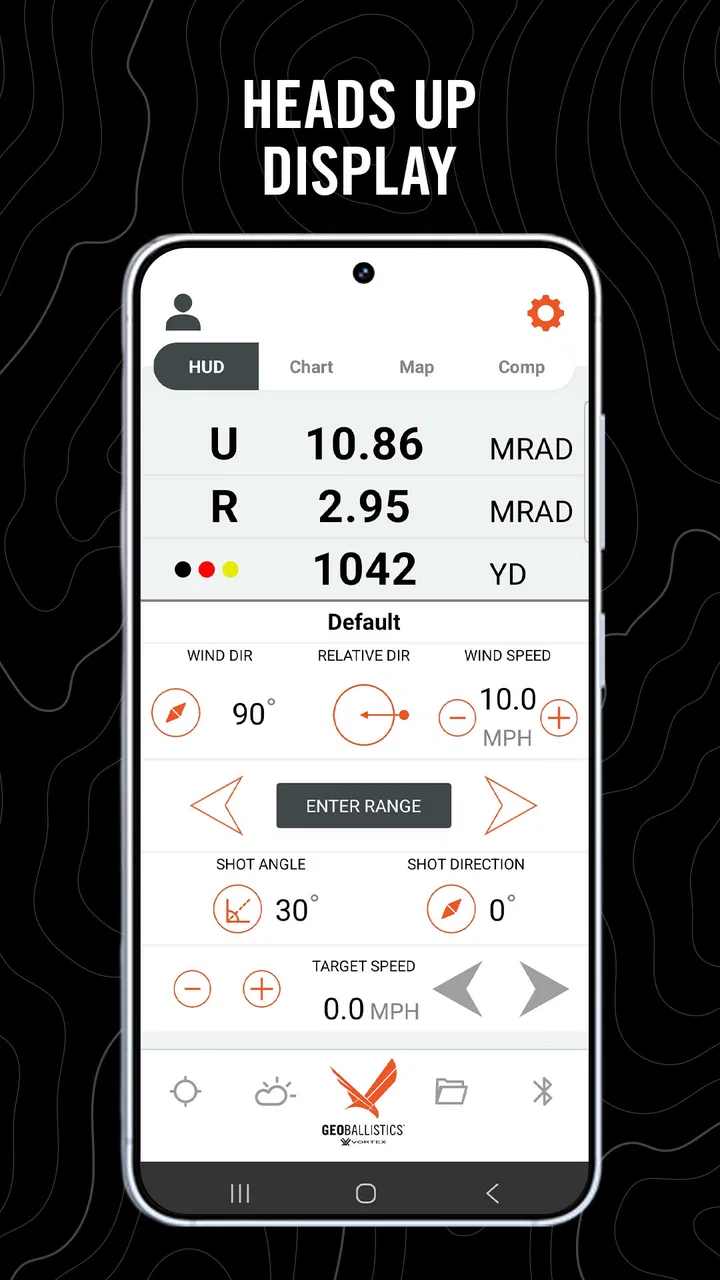
GeoBallistics is a ballistic calculation app designed to help shooters estimate bullet trajectories and make more informed adjustments in the field. It can account for factors such as ammunition, rifle specifications, scope settings, distance, weather conditions, and shooting angle. It is useful for long-range practice, hunting preparation, and range work, but its results should always be confirmed through real-world zeroing and safe shooting procedures.
02Is GeoBallistics suitable for beginners?
GeoBallistics can be used by beginners, although new users may need time to understand ballistic terminology and enter accurate rifle and ammunition data. The app is most effective when you already know your rifle’s zero distance, muzzle velocity, bullet information, sight height, and scope adjustment values. Beginners should treat the calculations as guidance, verify them at a proper range, and avoid relying on the app without practical experience.
03What information must be entered for accurate results?
The quality of GeoBallistics’ calculations depends heavily on the information you provide. You may need to enter details such as caliber, bullet weight, ballistic coefficient, muzzle velocity, barrel or rifle settings, sight height, zero range, scope click values, and atmospheric conditions. Incorrect or estimated data can produce misleading holdover and adjustment recommendations, so users should measure or verify their equipment specifications whenever possible.
04Does GeoBallistics work without an internet connection?
Many of the app’s core ballistic calculation features may be useful without a constant internet connection once the necessary profiles and data are available on the device. However, offline availability can depend on the specific version, operating system, account features, maps, weather services, or connected accessories being used. It is a good idea to open and test the app before traveling to an area with limited mobile coverage.
05Can GeoBallistics replace confirming shots at the range?
No. GeoBallistics is a calculation and planning tool, not a replacement for testing your rifle and ammunition in real conditions. Environmental changes, imperfect data, ammunition variation, equipment setup, and user input errors can all affect the actual point of impact. Before hunting or any serious shooting activity, confirm the rifle’s zero and predicted adjustments at a safe, approved range while following all applicable laws and firearm-safety rules.
Pros
- Detailed ballistic calculations support accurate long-range shooting.
- Works with many rifle
- ammunition
- and optic configurations.
- Offers useful environmental inputs such as wind
- temperature
- and altitude.
- Trajectory data can be customized for different shooting conditions.
- Helpful for hunters
- competitors
- and serious firearms enthusiasts.
Cons
- Advanced features may feel overwhelming for beginners.
- Accurate results depend on entering precise firearm and ammunition data.
- Some tools or content may require a paid subscription.
- Limited value for casual users who rarely shoot at long distances.
- Requires regular updates to maintain reliable maps and ballistic data.

GeoBallistics
Gallery